New Five-String Fiddle On the Way

New Fiddle (Finally) On the Way!

Slow Progress

This has been a difficult couple of years. Health issues within the family, and increasing responsibilities in other areas have made it difficult to actively work on new builds.

But currently, I have one new Five-string Fiddle that should be done in the near future.

Progress Photos:

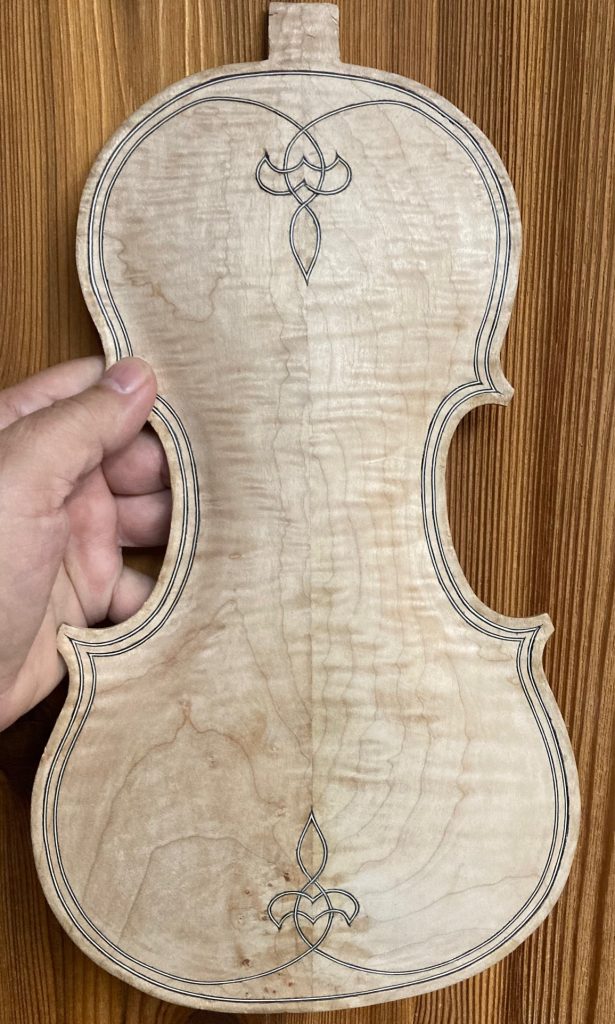
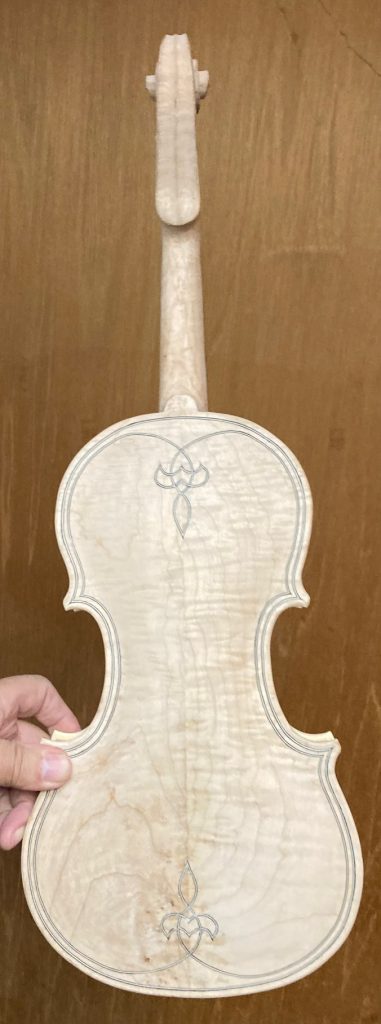
Back Plate for Chet Bishop Five String Fiddle
Completed Back Plate
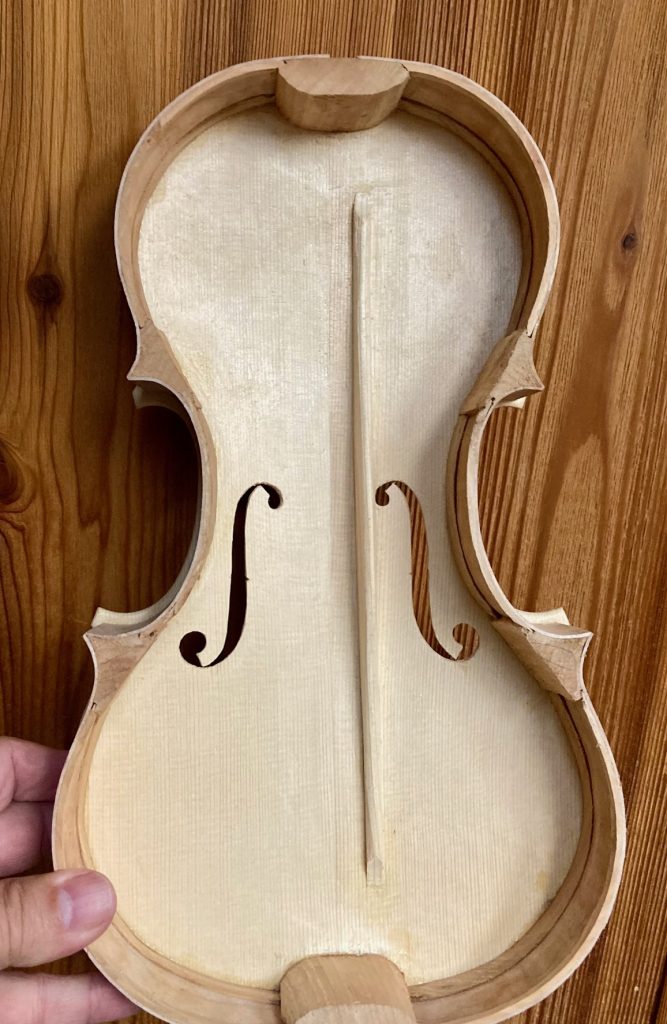
Garland and Front plate for five String Fiddle by Chet Bishop, Luthier
Inside Front Plate with Garland
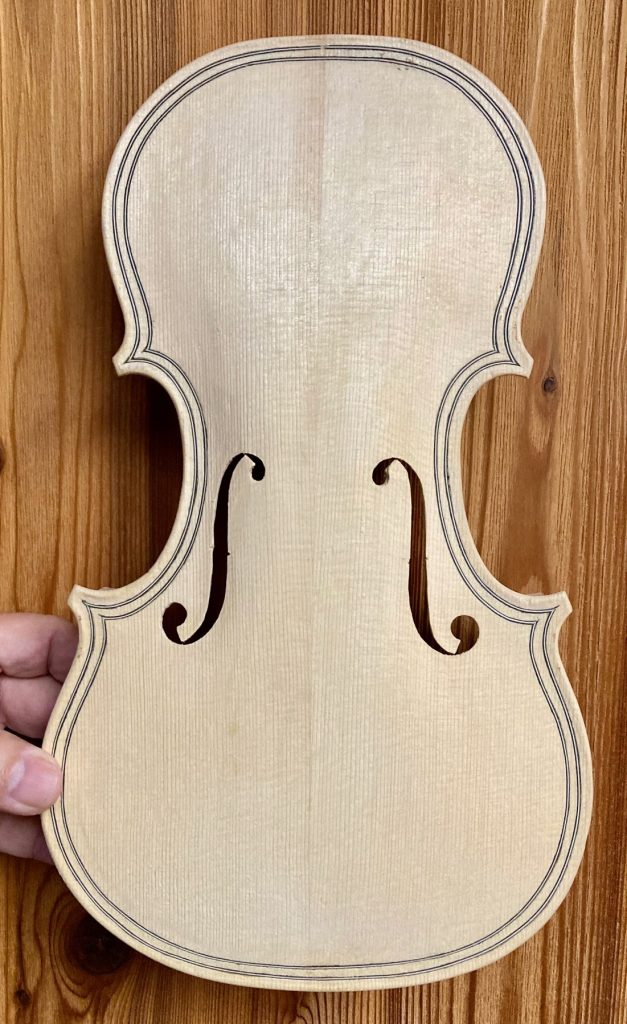
Front of Unfinished five string fiddle by Chet Bishop, Luthier
Front view Front plate with Garland


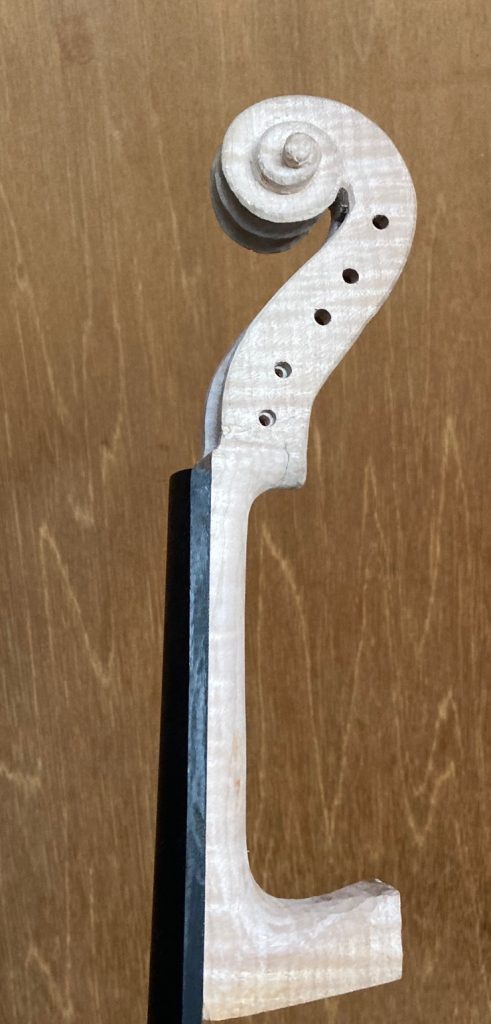
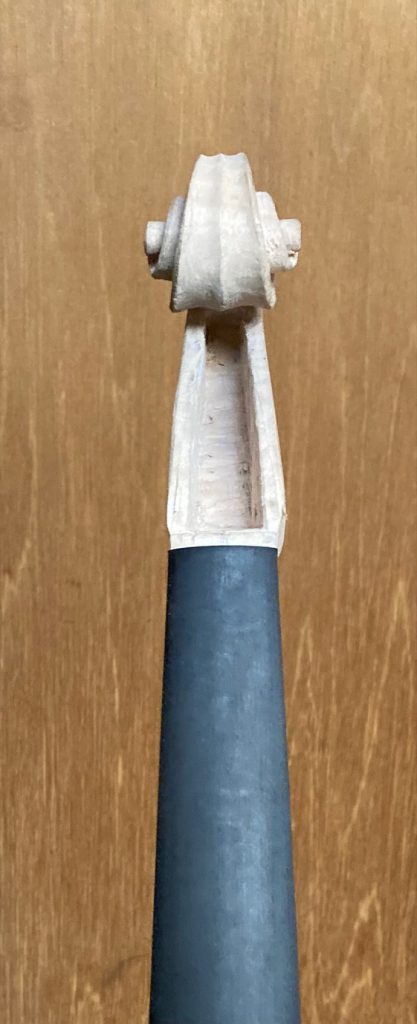
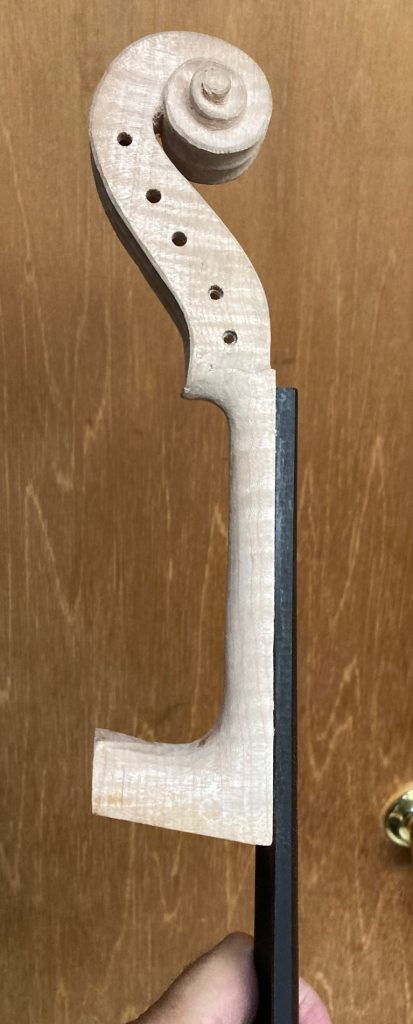
Neck for five string fiddle by Chet Bishop, Luthier
Treble Side View of Neck
Front View of five String Fiddle Neck by Chet Bishop, Luthier
Neck Front
Bass Side Neck


neck set five string fiddle by Chet Bishop, Luthier
Bass Side Neck Set
Front view Neck set of Five String Fiddle By Chet Bishop, Luthier
Front View Neck Set


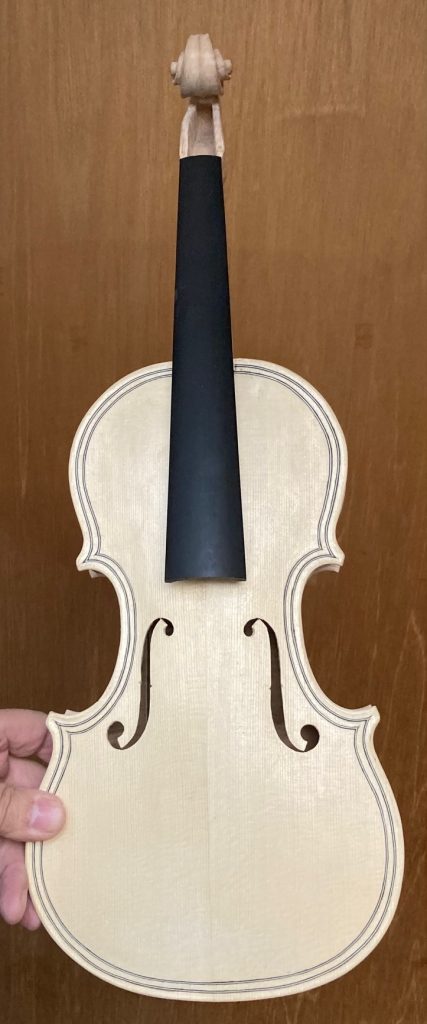
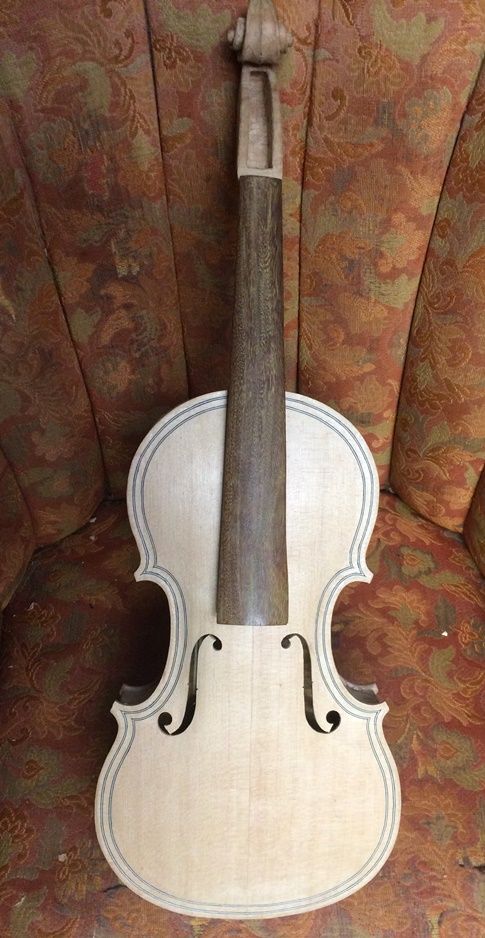
Front view white five string fiddle by Chet Bishop. Luthier
Front View Completed Fiddle in the White
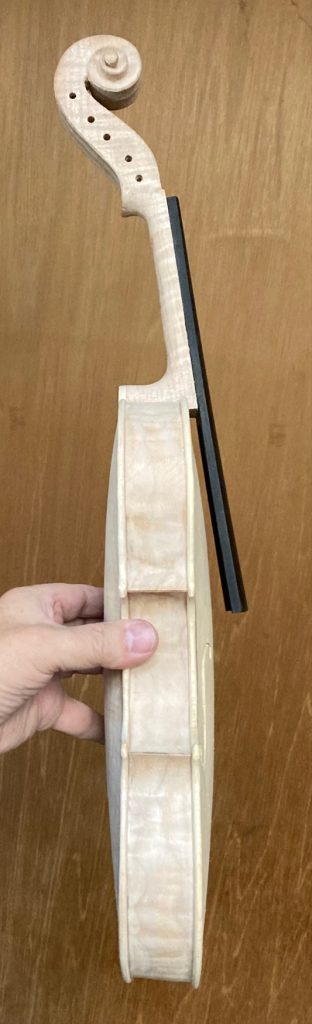
Bass Side Completed Fiddle in the White
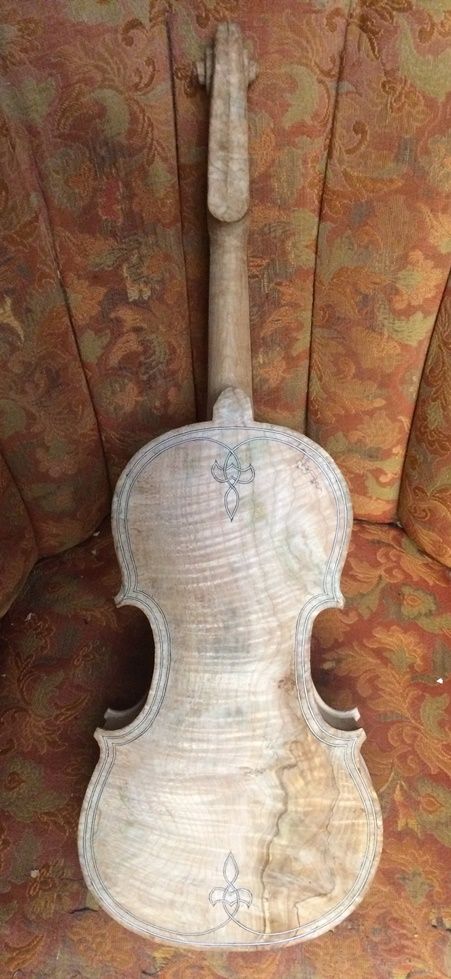
Completed Five String Fiddle in the white, Chet Bishop Luthier
Back Side Completed Fiddle in the White


Should be completed soon!


Thanks for Looking

Commissioned 5-string fiddle

5-String Fiddle nearing completion

Custom Made Five-string fiddle Choices

Back in December, I received a commission for a new 5-string “Bluegrass” fiddle. It was to be made on the same form as one of my earlier instruments but have a two-piece, straight-grained Sitka spruce top and a very wild-grained Oregon Big Leaf maple back, sides and neck. The customer specifically requested Ipe for the Fingerboard, saddle and nut. Ipe is extremely hard, dense wood, but not threatened or scarce, as ebony is becoming. It has an odd color when under the knife, and leaves a bright yellow dust when it is scraped or sawn, but it finishes to a nice dark brown and darkens further with age.

Wild Grain Makes for Tough Carving

The last time I posted, I was just beginning the back plate arching. It was tough carving, as it is extremely “wild” flame, and the Big Leaf Maple grain is anything but straight. The result, of course, is some very beautiful wood. But it is hard work, regardless. The blades must be kept razor-sharp, and cuts must be kept shallow in depth.

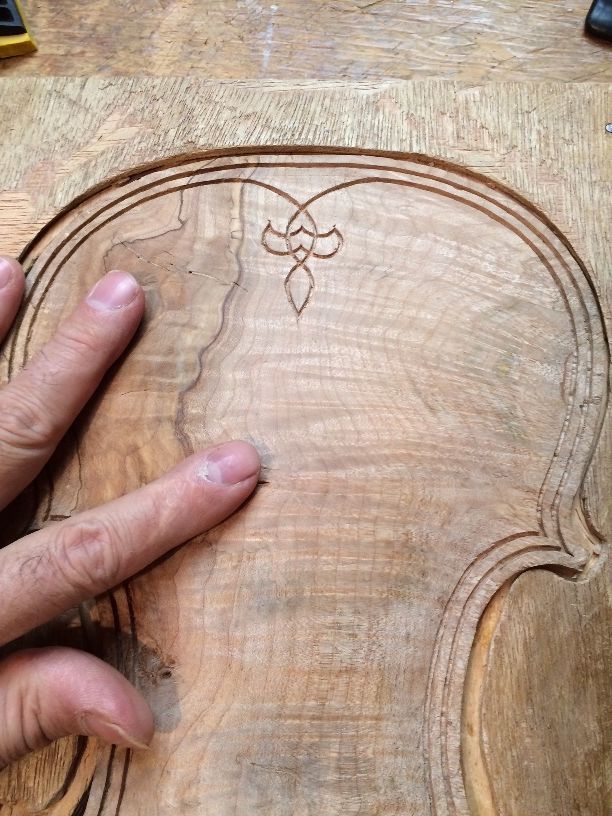
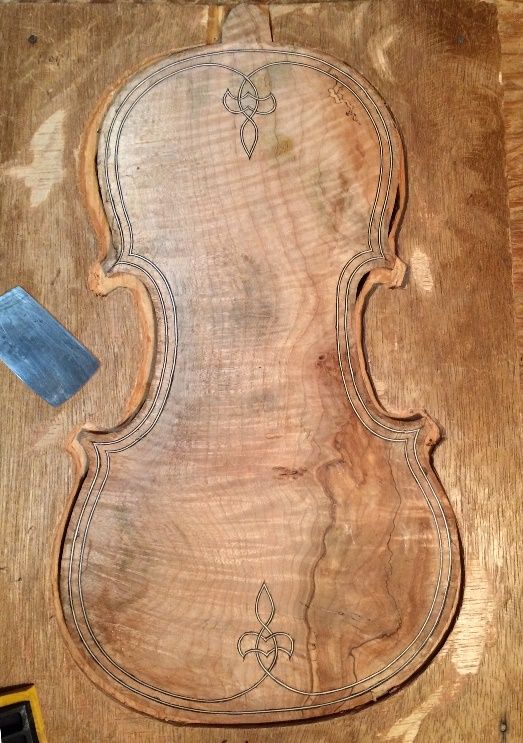
The purfling requested was not only double purfling (favored by a few of the early masters, especially those of Brescia) but was to include a purfling weave, as well, in the form of a modified “fleur-de-lis.”  This is a design I came up with on my first five-string fiddle, and have continued to use, in a variety of forms, ever since.

Five-string fiddle Back Purfling begun
Working on the back purfling slots.

I like the look of the double-purfling and the weave, but it is pretty hard on my hands, as I still do all my purfling inlays by hand. I know a lot of makers use a Dremel-tool, or something similar. Perhaps I eventually will succumb to that “new-fangled” tool as well.

At any rate, here is the back plate, with the purfling complete:

Completed Five-string fiddle back plate
Back plate complete, ready for final scraping and graduation.

Closing up the “Corpus”

I closed up the corpus a few nights ago: all that is left to do before varnishing is to complete the final carving of the neck heel, and all the final edgework, so that the wood is “varnish-ready.”

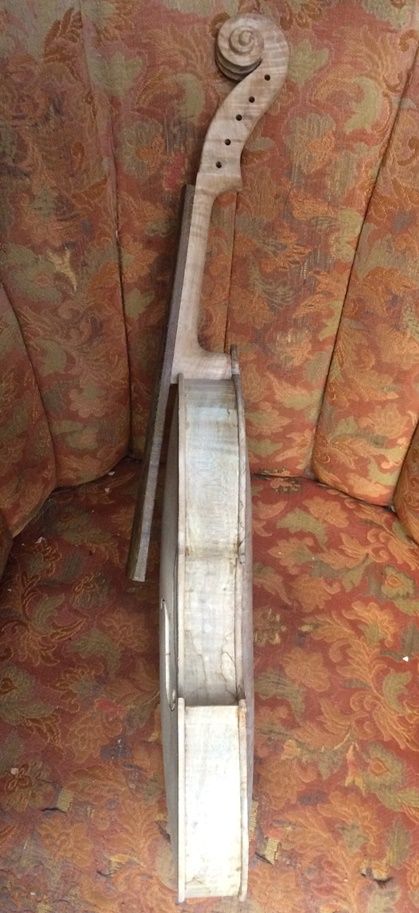
Closed Five-string fiddle corpus, side view.
Closed corpus, side view. (Note the heel yet to be carved; edgework incomplete.)


Closed Five-string fiddle Corpus Back
Closed Corpus, back view…button still too long; heel uncarved.


Closed Five-string fiddle Corpus, Front view
Closed Corpus, Front view. Corners and edgework still not done.

I will show one more progress report during the varnishing process, and the last for set-up and playing.

Thanks for looking.