
Lutherie Books:
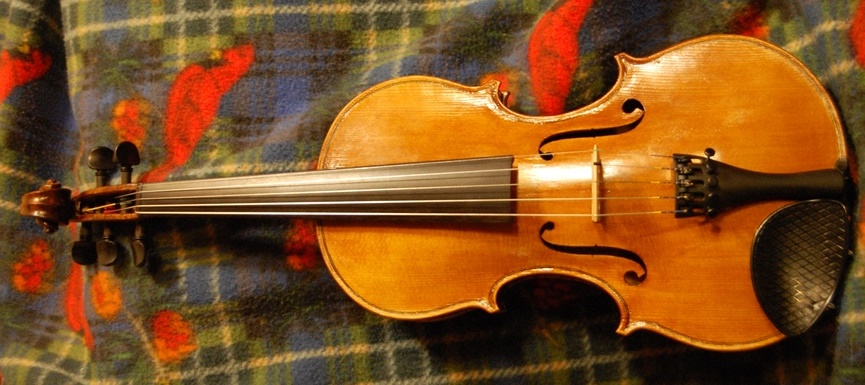
If you are interested in walking through the building of a commissioned five-string fiddle, read on! Here is a photo-essay, pretty much step-by-step, showing how I build an instrument.
The “steps” are much the same, regardless of the particular instrument. However, for a cello, for instance, it takes me about three times as long as to build a violin. Basses are an even bigger job!
At any rate, here is the first such book, and, if I write another, I will post it here, as well. (I do have other books, already, but not about five-string fiddles.)
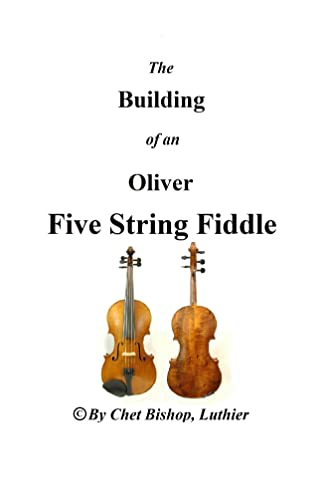
Building an Oliver Five String Fiddle
My first book on lutherie was a compilation of a series of web log posts, chronicling the building of a commissioned five-string fiddle. I offered it for years as a free .pdf download, but it did not work well on phones, or other small screens as the text was too small to read. So, I have revised and re-formatted the book as an electronic form, and am releasing it as a Kindle book. I hope to offer an online series of lutherie lessons later, in keeping with this style
The Journeys of the Swan
Kai Jensesn, a NASA engineer who loved violins, began to build a cello…but he was getting up in age, and his health failed before he could complete is beloved project.
Years later, long after his passing, his daughter brought the instrument to me to complete it for him, so that she would have her father’s cello to play.
This is the story, step-by-step, of how Kai Jensen’s dream was fulfilled and blossomed into a beautiful cello. It is also the story of how his daughter inherited her father’s joy. She named the completed instrument “The Swan,” because the first music it played was Saint-Saen’s “The Swan.”

The Bread-Bag Fiddle
Can a dilapidated, abused and neglected violin, literally falling to pieces in a junk store, be brought back to life? Can a “dead” fiddle be “resurrected” and become a beautiful, sweet-singing instrument again?
This is the encouraging story of how one such violin was brought back as a working instrument and is now being played professionally, in a gigging band. Not a true tutorial: just a demonstration of what can be done, at a fairly simple level.
Resurrecting Another Dead Fiddle
This is a photo-essay, chronicling the repair of a Violin. It was badly broken (and poorly built to begin with.) When I opened it, I found that it had also been badly repaired earlier. The violin was a relatively new violin, rather than an old “attic-treasure,” or garage-sale find. This had been the owner’s primary player until it was broken. But when I opened it up, I discovered earlier repairs that had been poorly conceived and badly carried out, so it required some heavier repairs, as opposed to being able to just “put it back together.”
Thanks for looking.